

If you bulk ferment in a tub, you've probably watched the litre markings slowly fade off the side, and found dough smeared up the walls and dried into the lid groove. Proving containers take a beating, and the way a lot of people clean them is exactly what wears them out.
Here's how to get a dough tub clean and keep it usable for years.
Why plastic tubs need a gentler hand
Most proving containers are plastic, and plastic has two weak spots. It scratches, and once it does, those tiny scratches hold onto residue and are harder to get properly clean. And the printed markings on the side, the ones you use to track your rise, wear off fast if you scrub them with anything abrasive or run them through a hot dishwasher cycle.
So the goal is to lift the dried dough off without scratching the surface or scrubbing the markings away.
The method
- Scrape the bulk of the dried dough out with a plastic scraper while the tub is dry. Get the worst of it off before any water goes near it.
- Fill with warm water and let it soak for fifteen minutes. Dried dough up the sides softens and releases far more easily than it does dry.
- Wipe down with a soft cloth or sponge, not a scourer. The softened dough wipes away, and the markings stay put.
- Do the lid separately. Dough loves to dry in the lid's rim and seal groove. Soak the lid too, then run a cloth or soft brush through the groove.
To skip the soak, a pump of Dissolve My Dough breaks the dough down so it wipes off with no scrubbing and no risk to the markings. The food-grade enzyme formula is made for exactly this kind of dried-on dough, and it's gentle on the plastic.
Keeping your tub in good shape
- Hand wash over the dishwasher where you can. Dishwasher heat can warp thinner plastic tubs over time and speeds up the fading of the markings.
- Store it with the lid off or loose. Sealing a slightly damp tub traps moisture, and that's how you end up with a musty smell or worse.
- Keep a soft sponge for it. One dedicated non-scratch sponge saves the surface from the scratches that abrasive pads leave behind.
What not to do
- Don't use abrasive scourers or scouring powder. They scratch the plastic and strip the measurement markings.
- Don't blast it with boiling water. It can warp the tub and isn't needed anyway. Warm water does the job.
- Don't store it sealed while damp. Trapped moisture leads to mustiness and mould in the seal.
- Don't tip dough scrapings down the sink. Dough swells in water and blocks drains. Bin it.
Frequently asked questions
How do you clean a dough proving container? Scrape the dried dough out while dry, soak the tub and lid in warm water for around fifteen minutes to soften the residue, then wipe down with a soft cloth. Avoid abrasive scourers so you don't scratch the plastic or rub off the markings.
Why do the markings come off my proving tub? Abrasive sponges, scouring powders and hot dishwasher cycles all wear the printed markings away. Hand washing with a soft cloth keeps them readable for much longer.
Can you put a plastic dough tub in the dishwasher? You can, but the heat can warp thinner tubs over time and fades the markings faster. Hand washing is gentler and makes the container last.
How do you clean dried dough out of a lid groove? Soak the lid in warm water to soften the dough, then run a soft brush or cloth through the seal groove. An enzyme cleaner breaks the dough down so it clears without picking at it.
Bulk ferment in peace. Dissolve My Dough is a gentle, plant-based enzyme cleaner made in Melbourne that lifts dried dough off tubs, bowls and benchtops without the scrubbing.
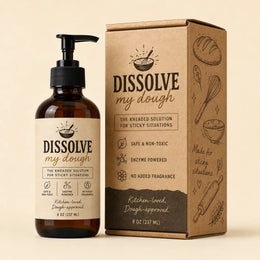
Dough Dissolve
A plant-based enzyme cleaner that dissolves dried dough so you can stop scrubbing.
Bake more. Scrub less.
Dough Dissolve is the plant-based enzyme cleaner built for sticky dough. Skip the overnight soak — let the formula do the work.
Try Dough Dissolve