A small, careful bit of chemistry.
No drama, no harsh fumes. Just enzymes doing what they already do in your gut, in your laundry, and in the bread you bake — gently breaking long molecules into shorter ones.
Dough sticks for two reasons: gluten forms a stretchy web, and starch turns tacky when it meets water. Our blend gently relaxes both, so what was glued to your bowl a minute ago slides off under the tap. No scrubbing, no scraping, no worry.
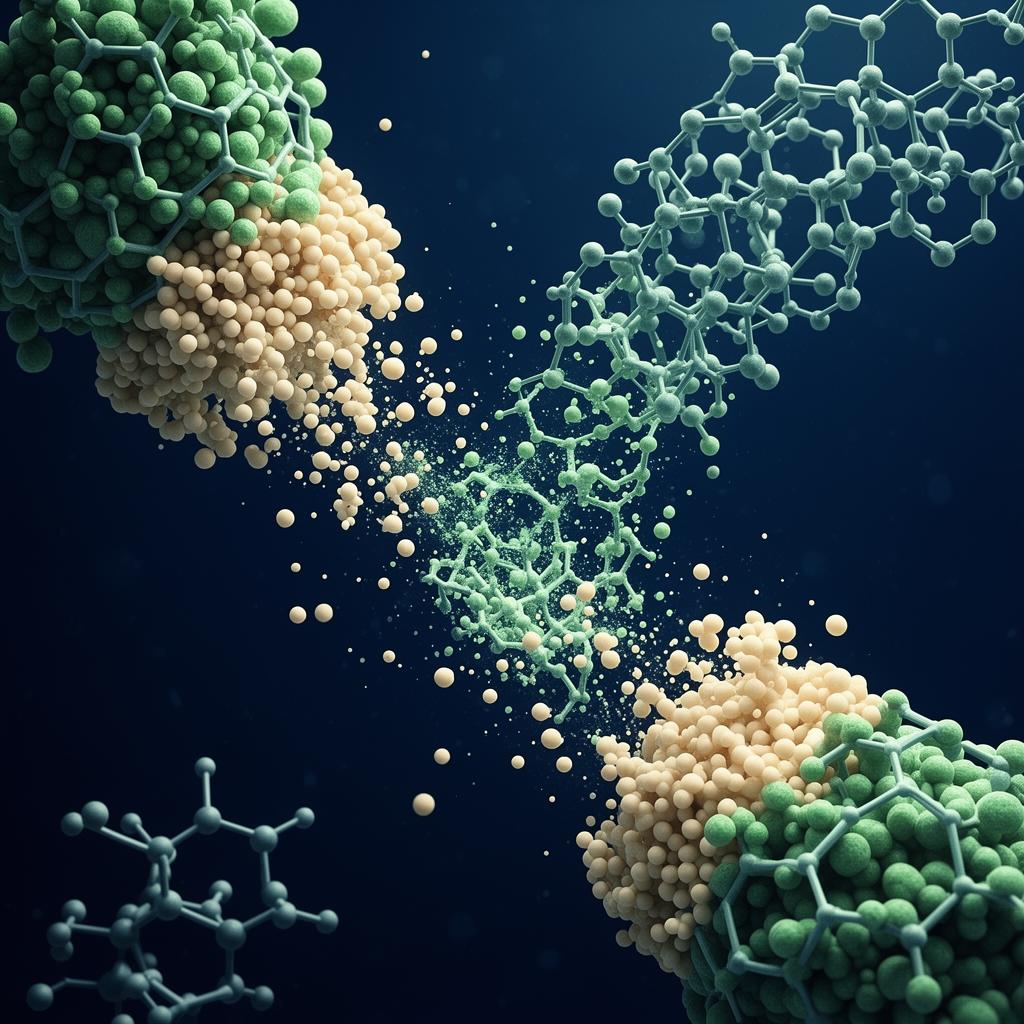
It's not you. It's the chemistry.
When flour meets water, the proteins link up into a stretchy network and the starch swells into a sticky gel. That's wonderful for bread — and frustrating for whoever has to clean the bowl. Knowing this, we designed something that works with the dough instead of against it.
Three quiet steps.
A drop of warm water and a small pour of formula. The enzymes spread through the residue.
Starch chains shorten. Gluten relaxes its grip. You can usually see it happen.
What's left lifts off with water. No scraping, no scratched surfaces, no second pass.
Side by side, in our kitchen.
Same bowl. Same dough. Same warm water. Here's what we measured, on average, across a hundred batches.
| Method | Avg. Time | Came Off |
|---|---|---|
| Hot water + scraping | 4 m 12 s | 78% |
| Regular dish soap | 2 m 48 s | 84% |
| Dissolve My Dough | 0 m 43 s | 99.4% |
Try it on your stickiest bowl.
Same formula we use at home. If it doesn't make cleanup easier, we'll refund the bottle.